The "At-Bat" Strategy: Why I’m Betting My Foundation Year on 11x14
There is a specific kind of anxiety that comes with a large, blank canvas. It’s the "Home Run" pressure—the feeling that every stroke must be a masterpiece because the stakes (and the material costs) are so high.
As I build 2026 into my Foundation Year, I’ve realized that swinging for the fences every time actually knocks me off my creative balance.
Instead, I’ve adopted an "At-Bat" approach, and it has completely changed the way I show up in the studio. To make this work, I’ve leaned into the 11x14 wood panel as my primary "velocity engine." Here is why this specific size is the backbone of my business and my growth as a painter.
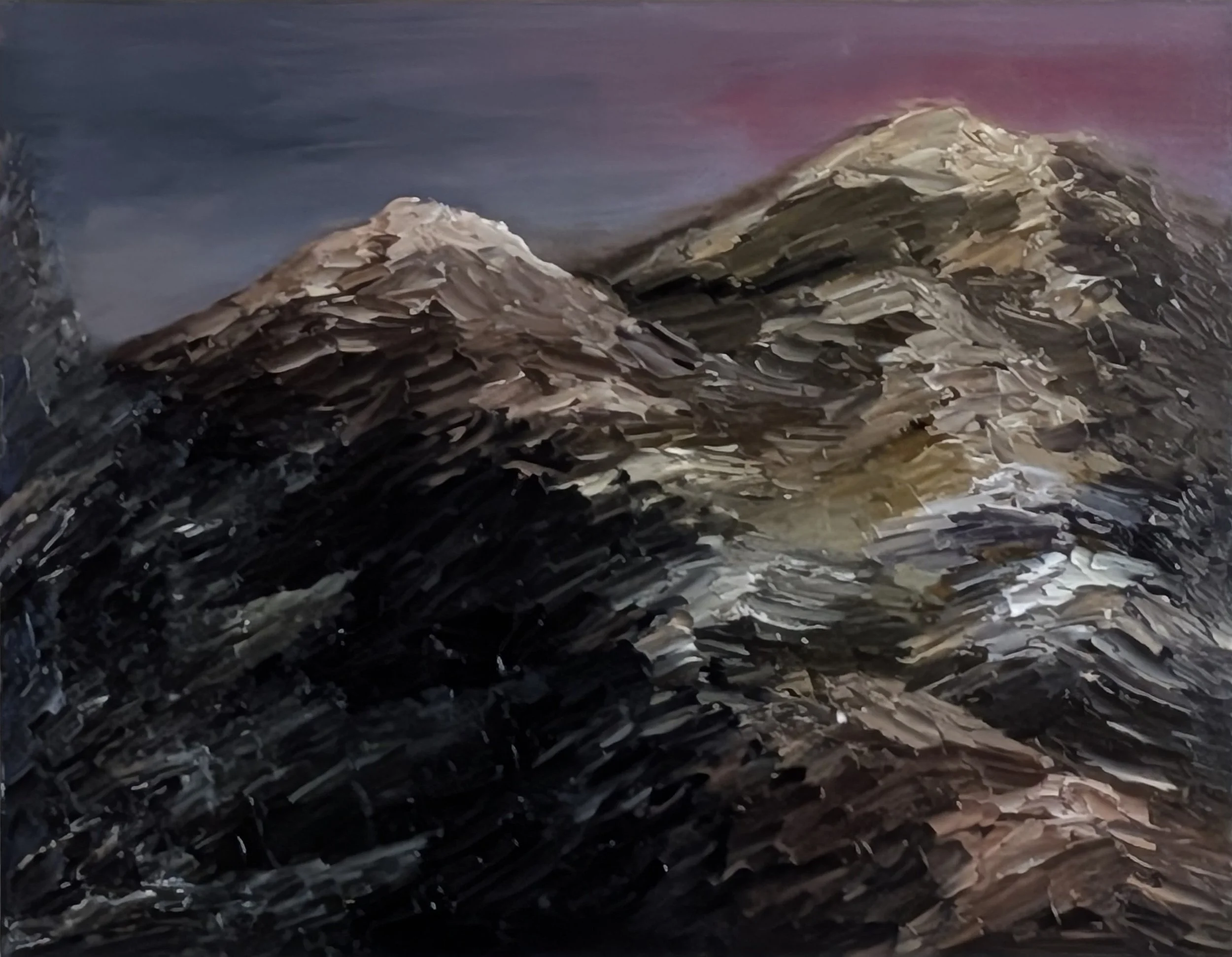
This painting of the Presidential Range was an at-bat that helped me prepare for a larger work, the homerun swing.
1. Speed is a Skill
My approach demands quick movement. An 11x14 panel is the "Goldilocks" zone—it’s large enough to be a formal, professional painting, but small enough to be completed in a single, focused session. This allows me to move from a field study to a finished work without losing the emotional spark.
By "painting small," I’m actually expanding my skills. It forces me to fit massive details—the Presidential Range or the Passaic River—into a constrained space. It’s a technical puzzle that keeps my knife work sharp.
2. The Ritual Remains the Same
"Small" does not mean "simplified." Every 11x14 piece receives the same professional respect as a four-foot anchor piece.
The Prep: Multiple layers of hand-sanded gesso on wood panels to create that perfect, toothy surface.
The Planning: Studies focused on light and mass.
The Finish: A final coat of Gamvar varnish once the oil has cured.
In Tonalism, we think about how light interacts with mass. It is often much easier to translate that atmospheric "glow" between a 5x7 study and an 11x14 panel than it is to scale it up to a massive canvas where the paint can lose its intimacy.
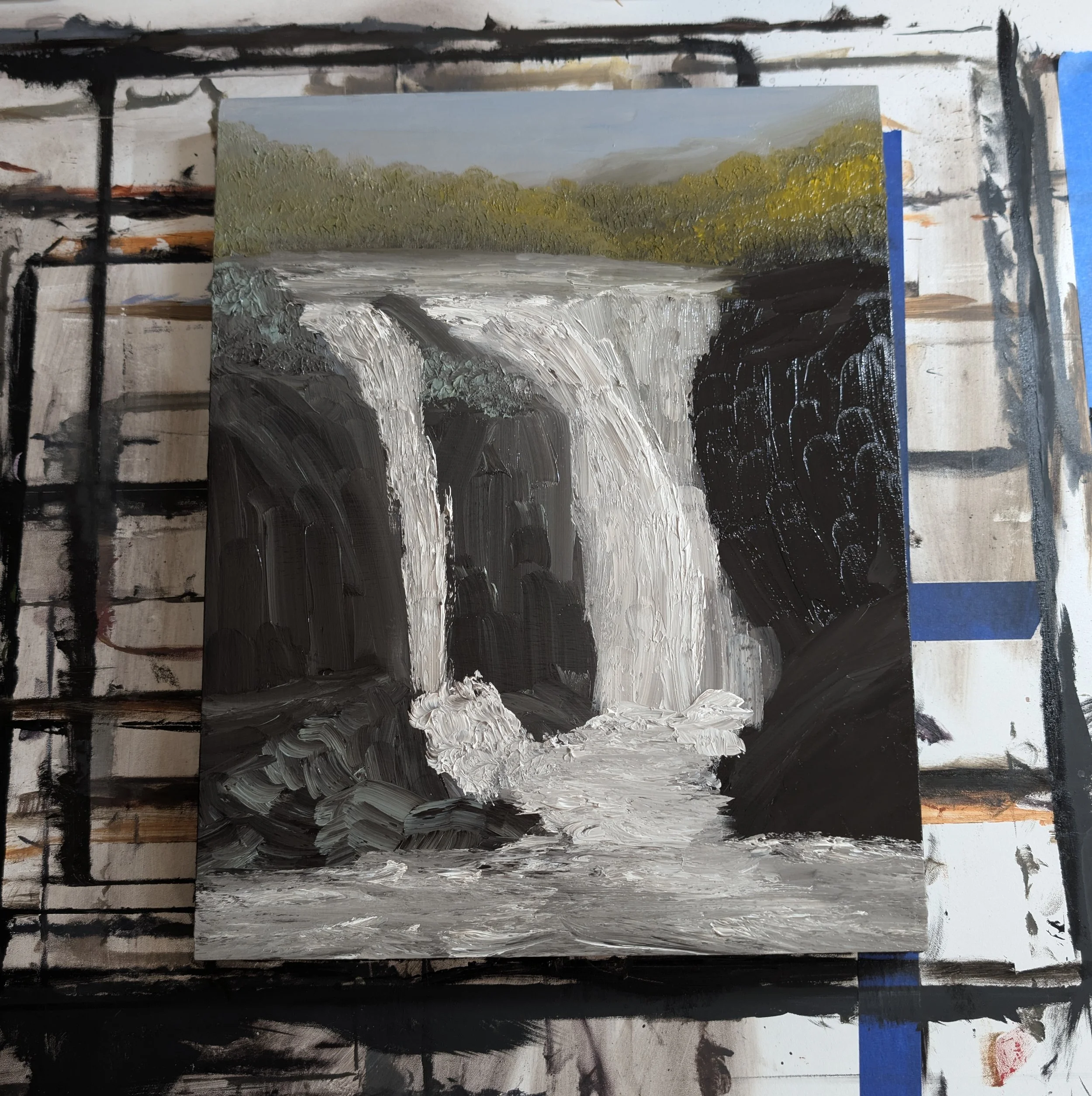
Building the mass of the great falls and respecting their ancient power.
3. Sustainability and the "Spiritual Mass"
Logistically, painting at this scale is what makes an art career sustainable. Large anchor pieces are fun, but they drain creative reserves and create storage nightmares. With the 11x14 format, I can stay in a flow state—painting, drying, and moving to the next "at-bat" without the studio becoming a bottleneck.
But there’s a spiritual side to this, too. My focus is on the mass of objects.
Take my recent piece, Great Falls of Paterson. A traditional Impressionist might focus on the fleeting "moment" of the falling water. My goal was the opposite: I wanted to capture the history. I painted the water as a tactile, ageless force carving through rock. By focusing on the mass and the light, I’m trying to reveal the spiritual nature of the landscape—the parts that don't change when the sun goes down.
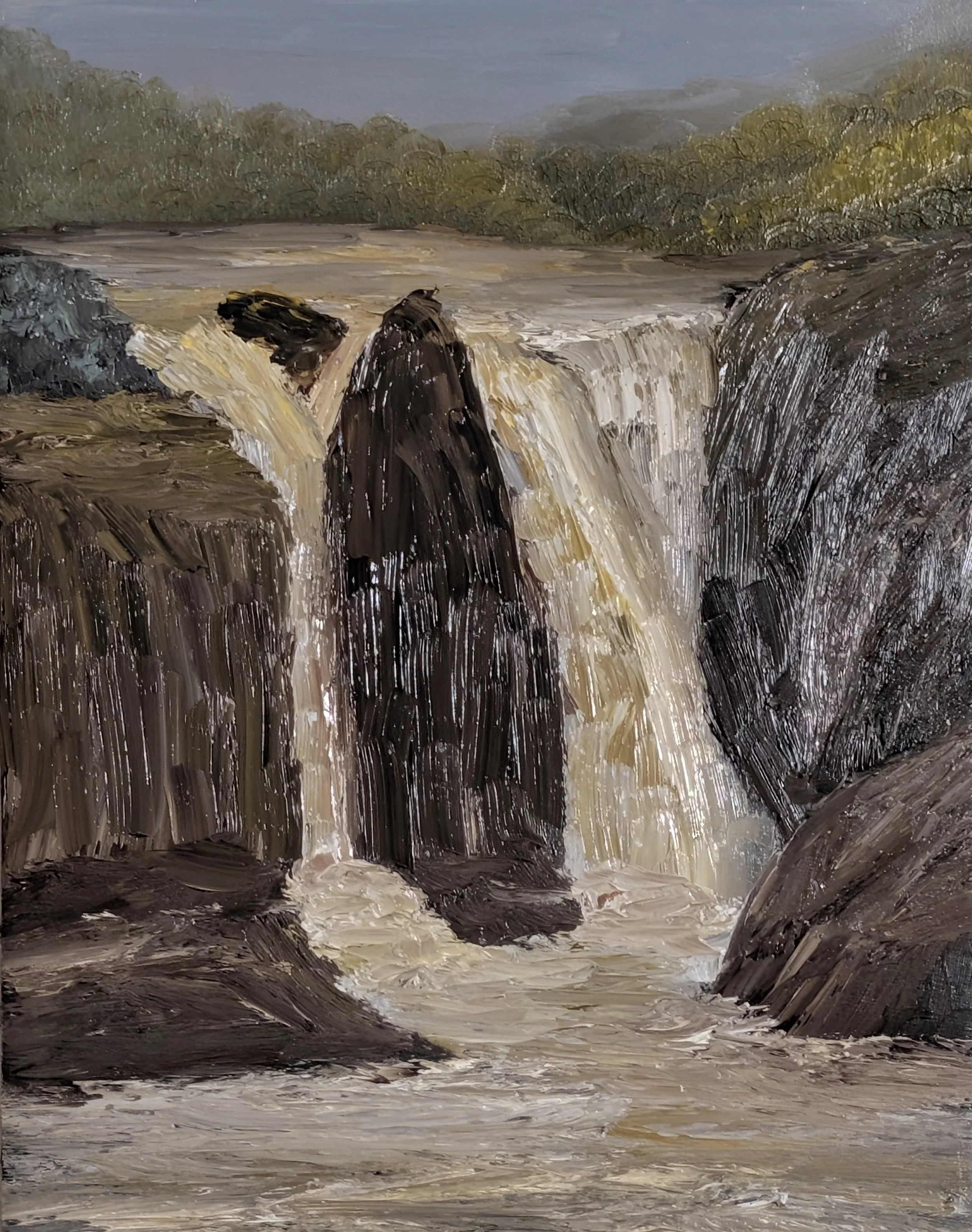
The powerful Passaic River, overflowing with silt.
Building the Foundation
Every 11x14 piece I finish is a "strong swing for the outfield." It’s a repeatable, high-quality success that builds my inventory and my confidence.
As part of this Foundation Year, I’ve just moved a new collection of these 11x14 panels to my Saatchi Art store. These are the pieces that are keeping me on balance, and they are the first works I’m ready to send out into the world.