The Best Brush in My Studio is an Old T-Shirt
There is a specific kind of silence that comes with a large, blank canvas. It’s not a peaceful silence; it’s a demanding one. When I sat down to work on my latest anchor piece, the "white void" felt heavier than usual.
In the past, I might have approached this with hesitation. But lately, my philosophy has shifted toward the "at-bat." You don't get the home run by staring at the plate; you get it by swinging.
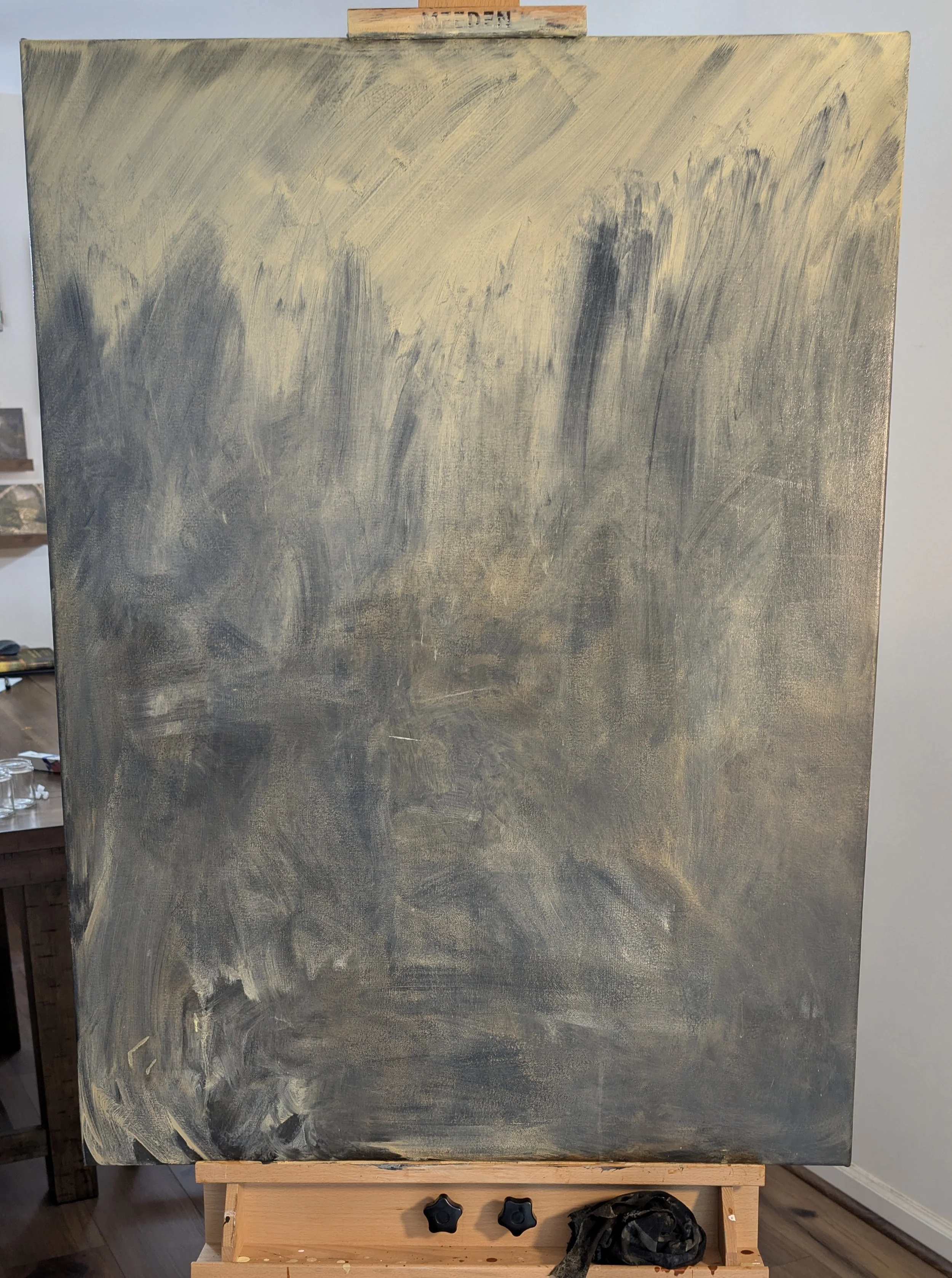
This is where the heaviest parts of the painting begin to live. No details yet—just a focus on mass and the first search for where the light will eventually land.
Sculpting with Light
I started with a light wash, but the real work began when I picked up a t-shirt. Instead of focused brushwork, I began wiping away.
I wasn't just cleaning the surface; I was thinking in terms of mass and light. I was identifying where the heaviest parts of the composition would live and where the brightest points needed to breathe. By using the cloth to clear the excess paint, I was able to create a detailed underpainting that didn't just sit on the canvas—it glowed from beneath. It’s a reminder that sometimes, painting is as much about what you take away as what you put down.
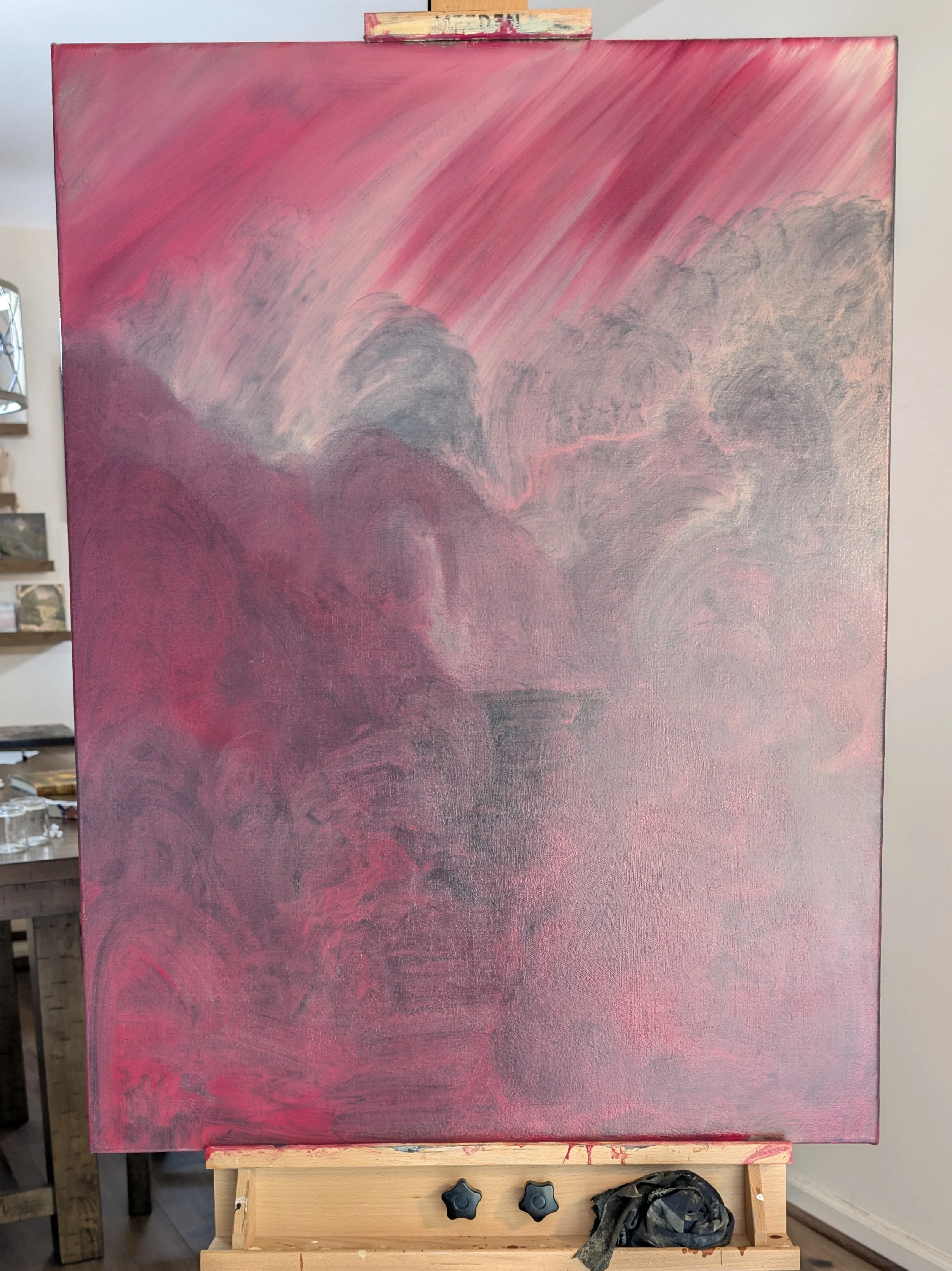
This is where the magic of the rag comes in. By wiping back the pigment, I’m not just thinning paint—I’m identifying the brightest points of the sky and the atmospheric depth of the trees.
The Detail Trap
As the piece progressed, I fell into a familiar trap. In previous works, I’ve had success using heavy, physical marks of white to create a path for the eye. It’s a bold technique that usually adds a nice energy.
I tried it here, laying down thick, confident strokes in the foreground. But as soon as the paint hit the panel, I knew I had made a mistake.
The piece was defined by a muted light and deep, atmospheric shadows. Those bright, heavy marks weren't guiding the eye; they were screaming at it. They shattered the "glow" I had worked so hard to build.
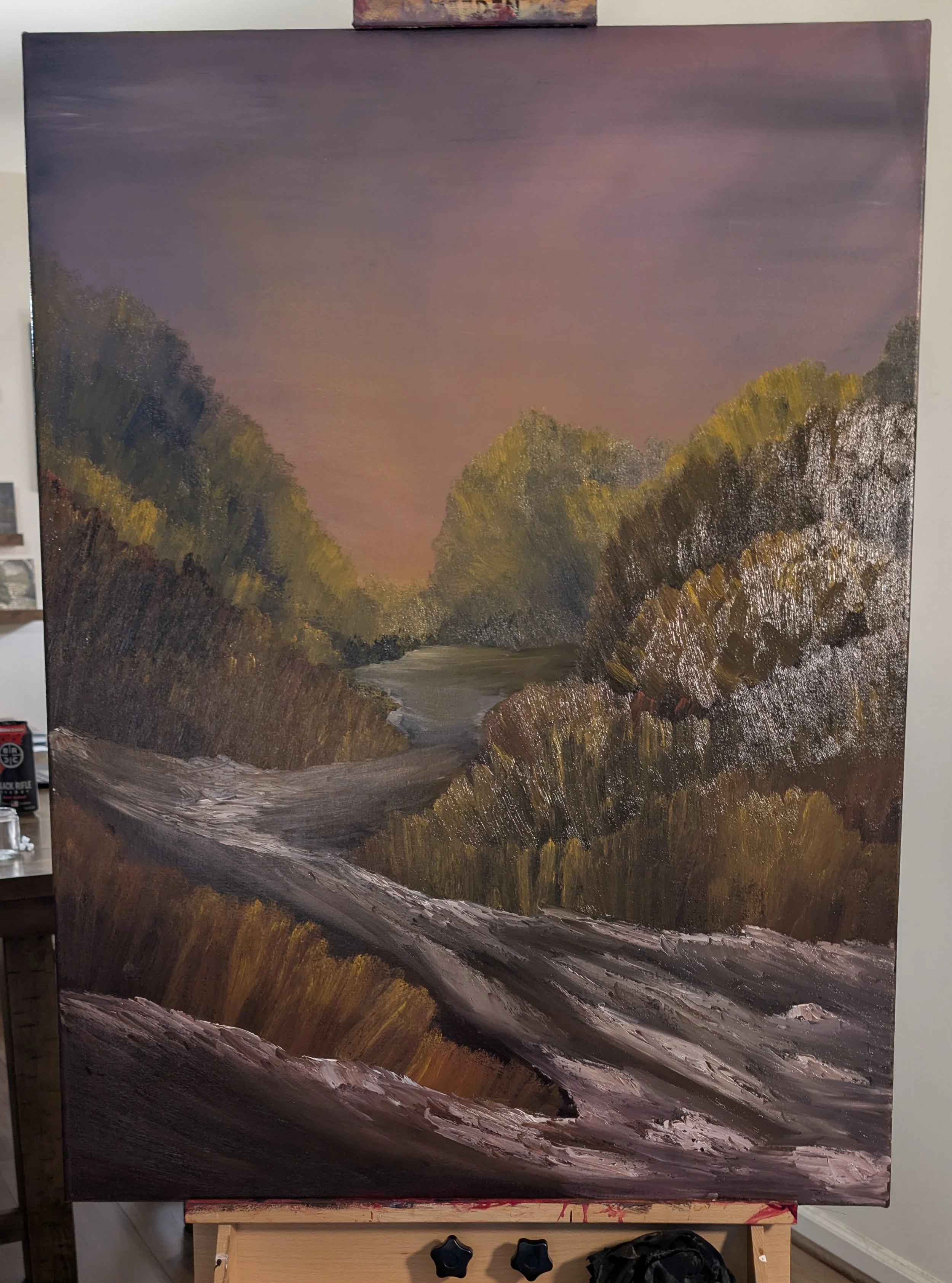
I tried to force a path for the eye using thick strokes of white and ochre. As soon as I stepped back, I knew I’d made a mistake. The foreground was too "loud" for the atmospheric glow of the sky.
The "#2 T-Shirt Brush"
This was the pivot point. I had to overcome the stress of destroying "finished" work to save the painting.
I went back to the rag—or what I’ve started calling the "Old #2 T-Shirt Brush." I wiped back the over-detailed foreground, removing the clutter and the noise. Then, using the crumpled fabric, I applied the illusion of texture.
By pushing that boundary and ditching the traditional brush, I found a way to suggest the complexity of the ground without competing with the light of the sky.
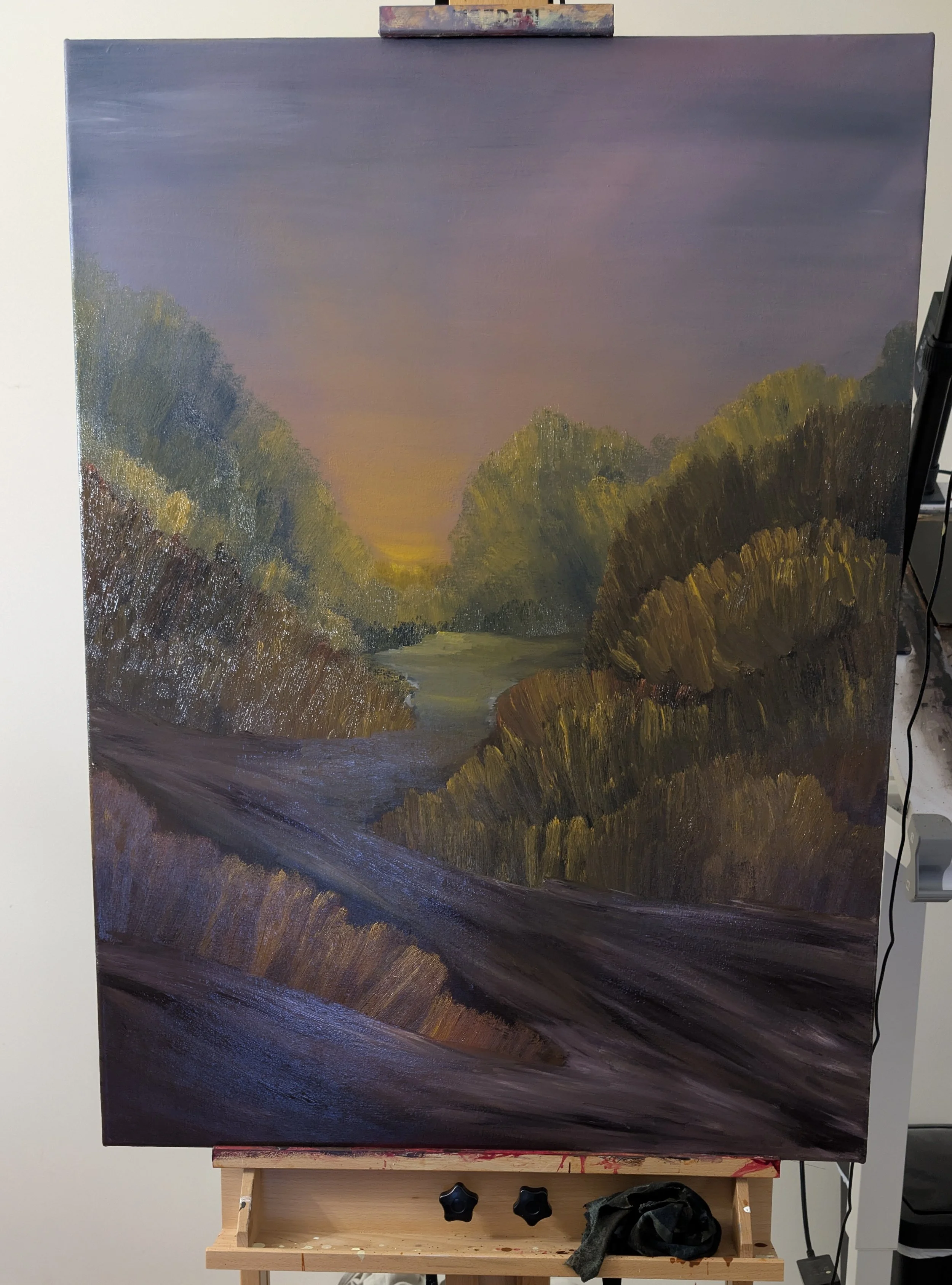
I used a brush to soften the heavy marks that were fighting the light. It’s a stressful moment to wipe away "finished" work, but it was the only way to restore the glow. Next step: bringing back the illusion of texture without the clutter.
The Studio Takeaway
Artistic growth usually happens right on the edge of a mistake. Pushing boundaries isn't always about learning a complex new glaze or buying an expensive medium. Sometimes, it’s just the willingness to "kill your darlings"—to wipe away a foreground you spent hours on because the painting knows what it needs better than you do.
And sometimes, the best tool for the job is exactly what you’re wearing.
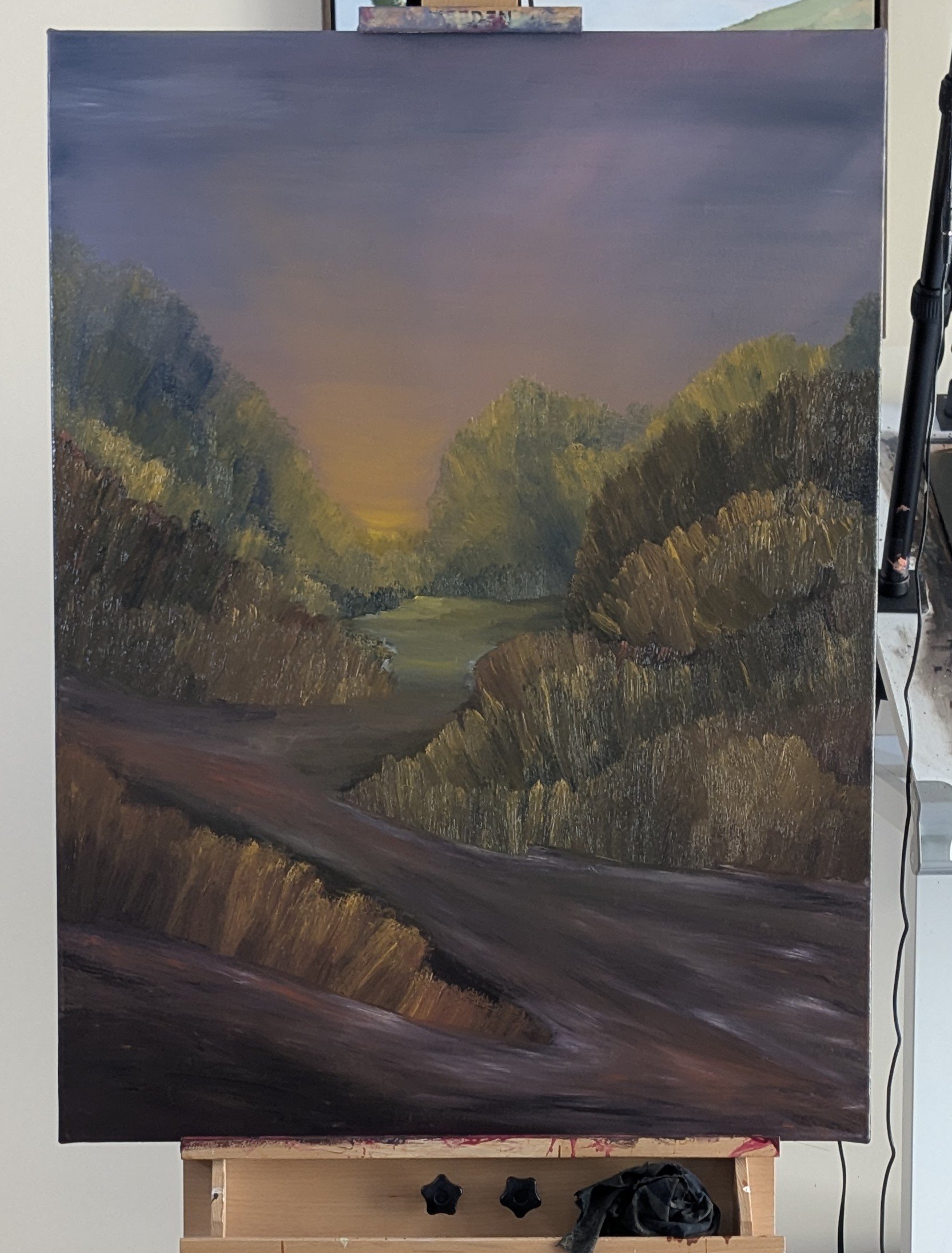
To bring this home, I went back to the "Old #2 T-shirt brush." By combining standard brushwork with the crumpled shirt, I was able to re-introduce muted details into the shadows. It’s not about painting every leaf; it’s about using the cloth to suggest texture while letting the distant glow do the heavy lifting.