The Clarity of a Clean Palette: What “Mud” Taught Me This Week
There is a specific kind of frustration that lives in the transition between an artist’s mind and the wooden panel. This week, I sat down with a series of small 8x8 studies, expecting the familiar flow of my "at-bat" philosophy. Instead, I found myself in a wrestling match.
I was working on the first panel, and something was fundamentally off. I kept tinkering. I reworked the same square inch over and over, filling and refilling the surface with the same tired colors. In a desperate attempt to salvage the piece, I abandoned color entirely and tried to force depth through heavy impasto texture alone. I was trying to build a house on a foundation that had already turned to quicksand.
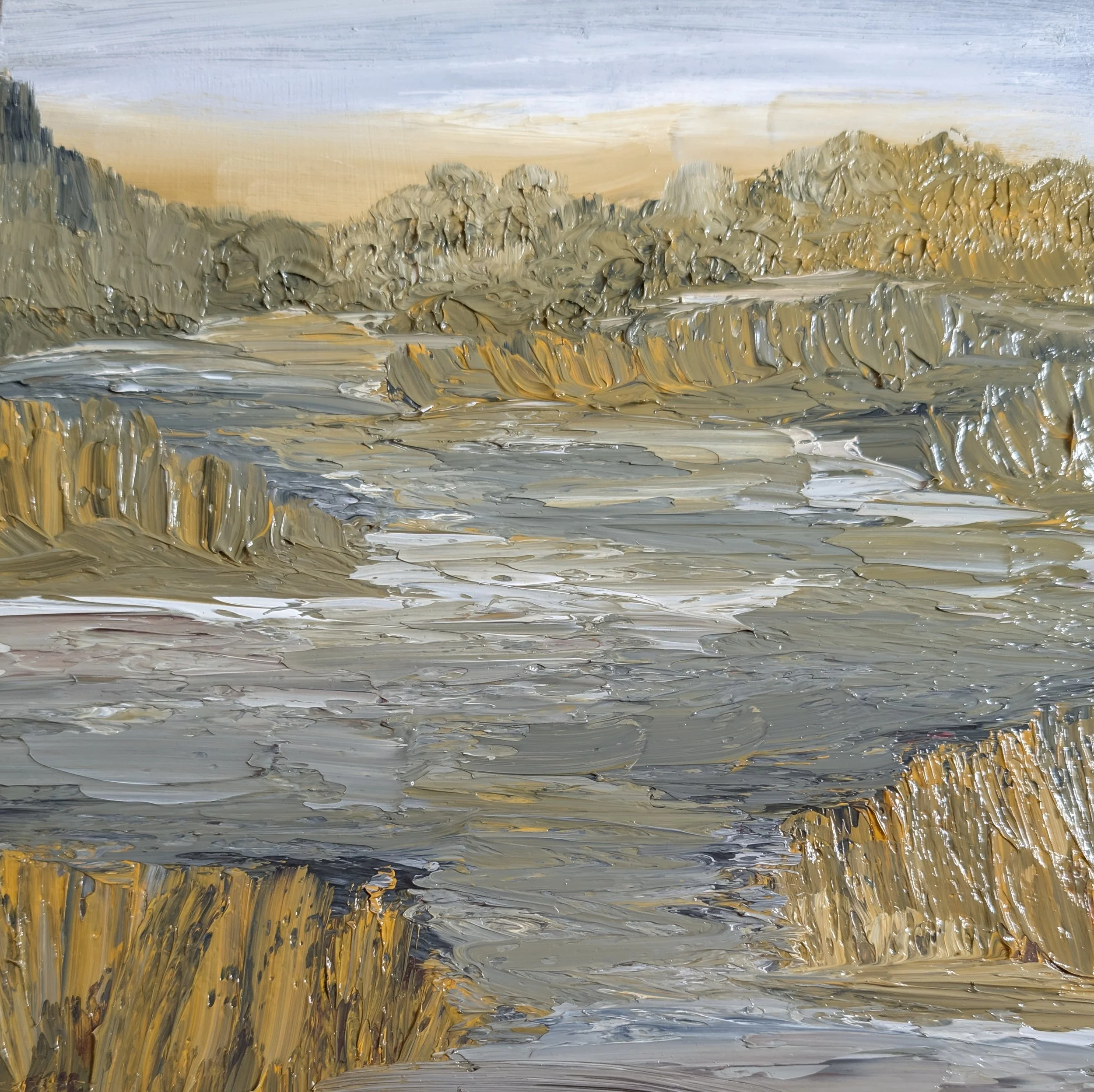
A slow river flowing across a plain.
It wasn't until I reached the final panel of the day that the truth revealed itself. I reached for my pigments and realized I had completely run out of red and yellow.
I looked down at my palette. It was a chaotic, grey mess. There was plenty of paint left, but there was no color, no distinction, and—most importantly—no order. My palette had become "mud," and because the source was muddy, the paintings never stood a chance
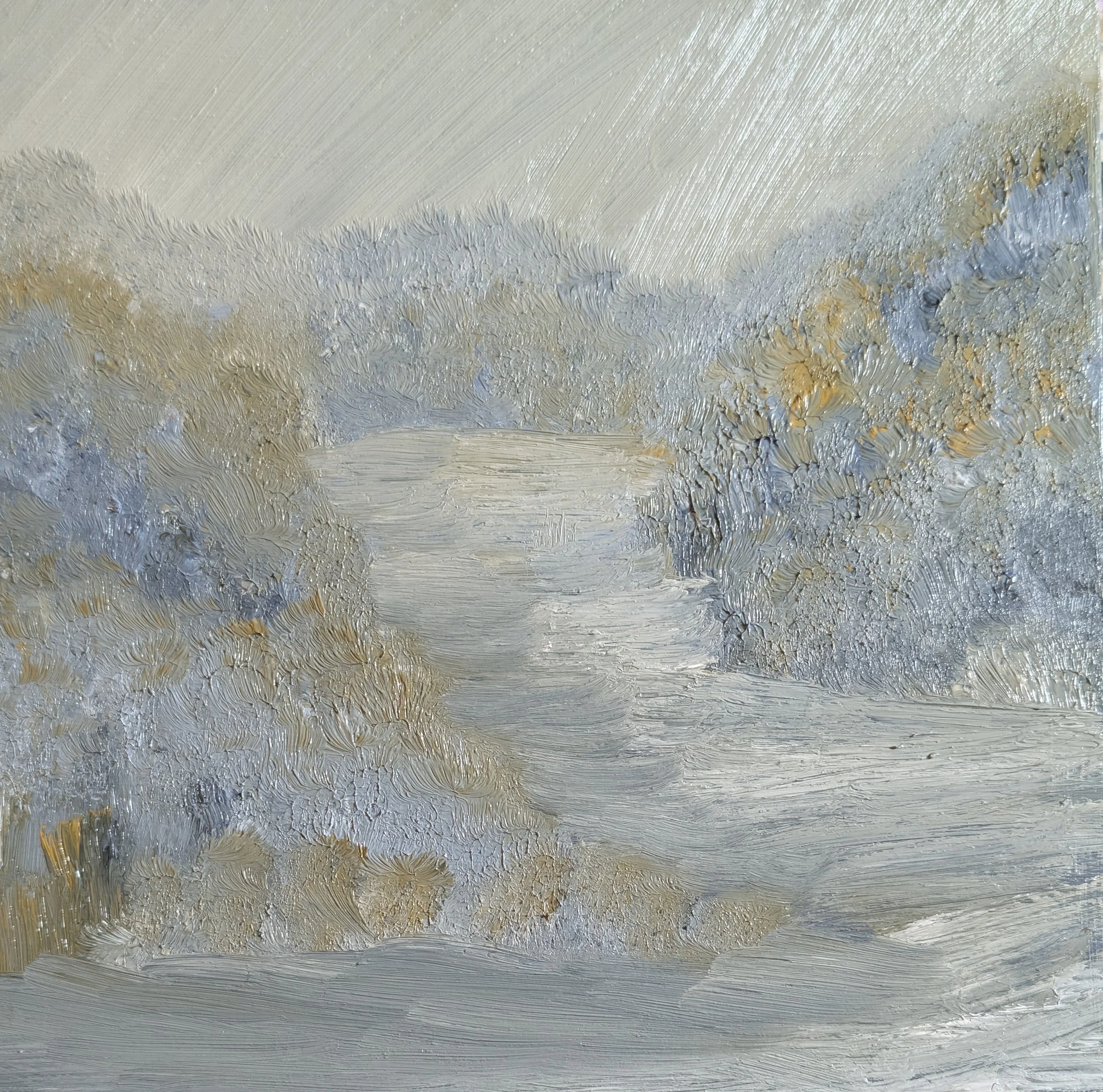
A painting with no color.
Returning to the Source
When things fall apart, the only solution is to return to the basics. I cleared the board and started over with a structured palette. I laid out my paints with intention, physically separating the warms from the cools.
I stopped "guessing" and started planning. I went back to the core elements that define my Tonalist style:
The Depth: Using my three blacks to anchor the shadows.
The Warmth: Bringing in Burnt Sienna and Yellow Ochre to find the earth's heat.
The Glow: Using Zinc White to establish that soft, atmospheric light.
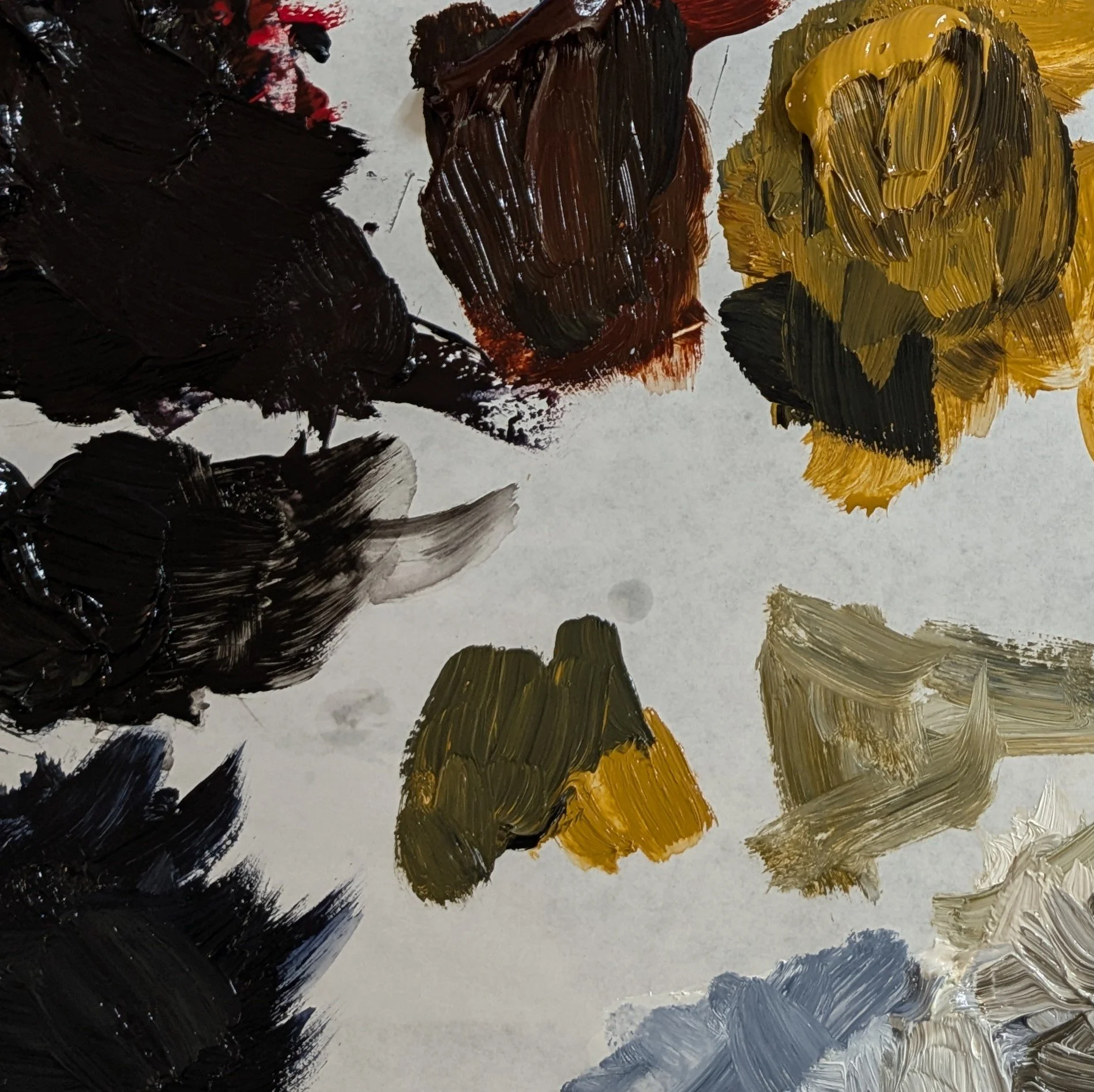
A New Architecture
With a clean palette came a clear plan. I started with a wash of the three blacks, followed by a layer of white and yellow to lock in the "glow." As I introduced a solvent-free medium, the paint became increasingly "fat" and responsive.
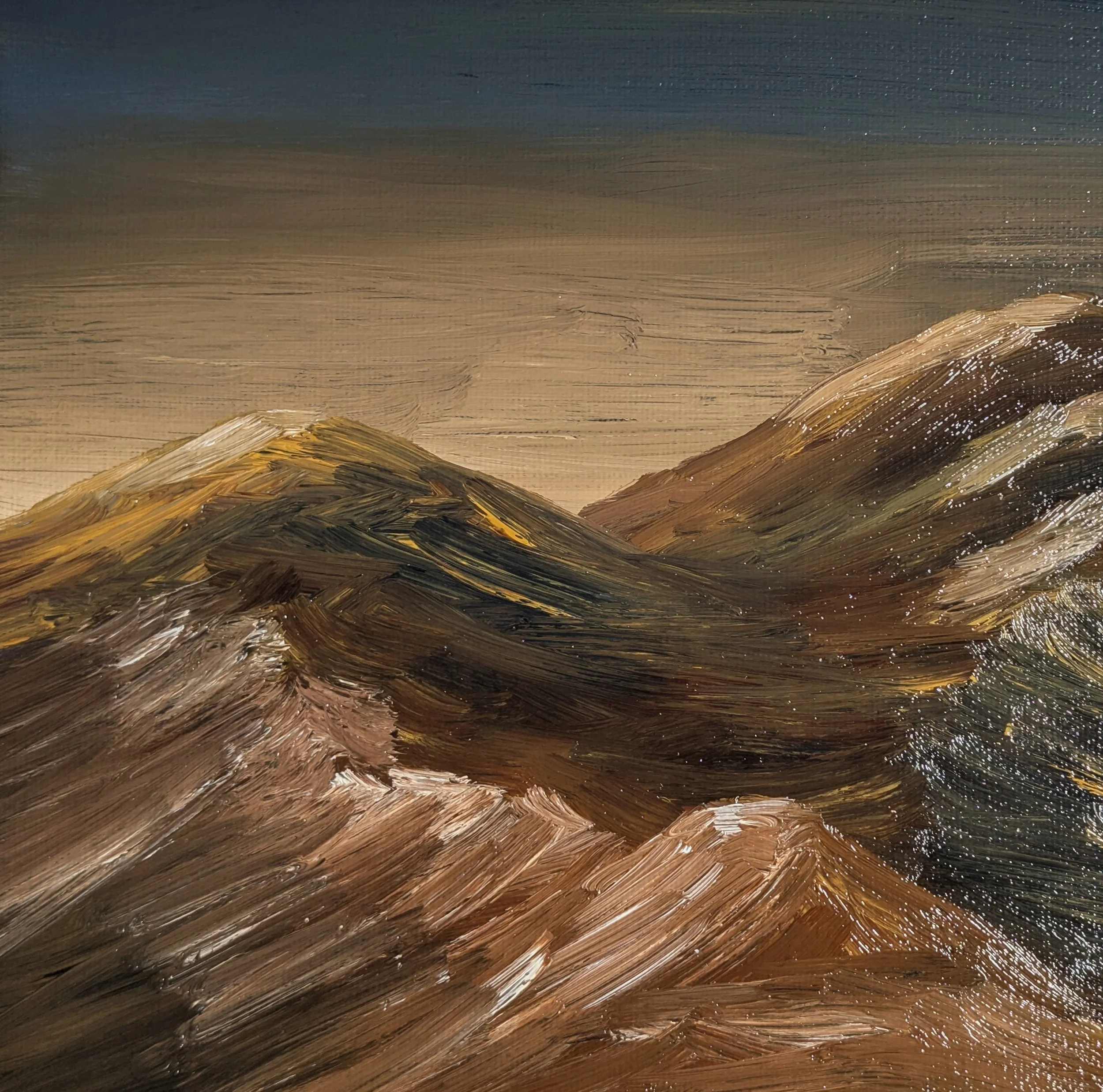
The first glow of light along a mountain ridge.
I rebuilt the structure layer by layer: Payne’s Grey for the distant horizons, Ivory Black for the foreground weight, and a mixture of Payne’s Grey and Cadmium Red for those deep, complex shadows. Because the base was finally solid, I felt a sudden, familiar freedom. I wasn't fighting the paint anymore; I was placing intentional strokes.
I finished by leaning into a moment of pure intuition—adding a few flicks of white to mimic a distant star field. It was a new technique, a small risk taken only because I finally felt the ground beneath my feet again.
The Lesson in the Muck
It is easy to get caught up in the "doing" and forget the "preparing." This week reminded me that creativity requires a container. Without the discipline of an organized palette and a structured plan, the art loses its voice.
I’m grateful for that "muddy" first panel. It forced me to stop, breathe, and remember that sometimes the most artistic thing you can do is wash your palette and start again from the beginning.
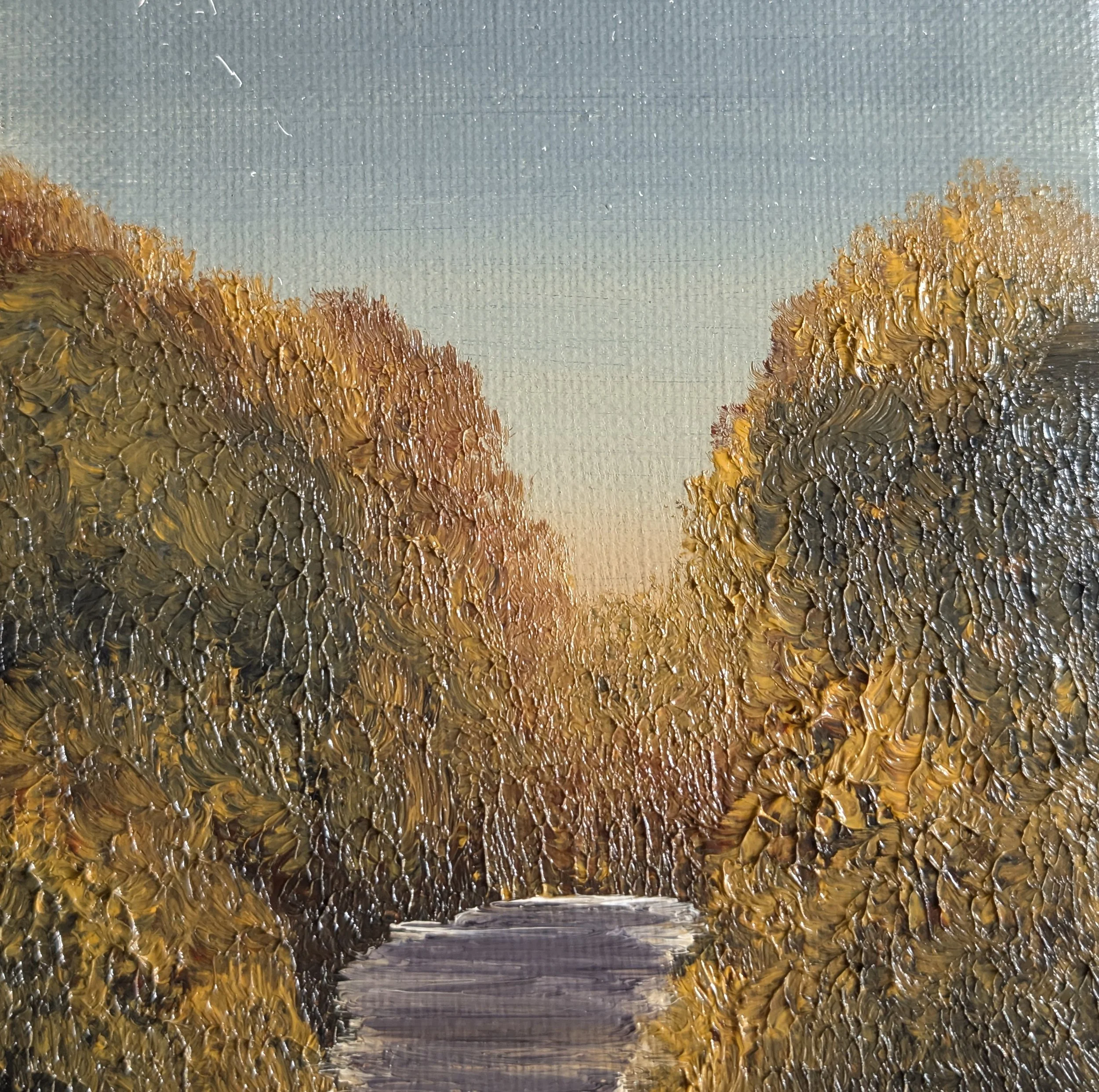
A river cutting through a thick forest.